

Heart of the Community, Center of Light & Learning
Carnegie One Braddock, Library Renovation
←
To Project Types
Braddock, PA | 49,000 SF Renovation
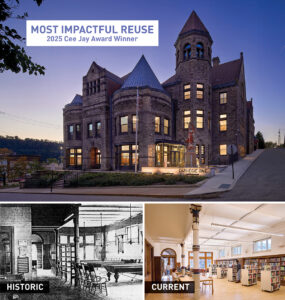
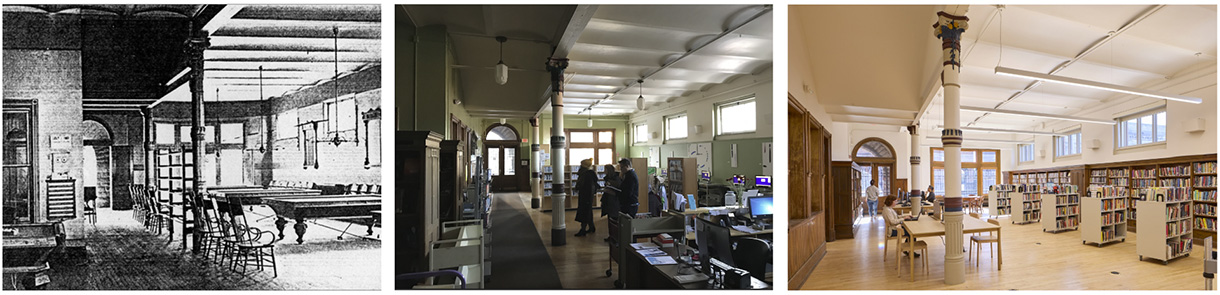 One room through the centuries. From pool tables to mobile book shelves, Pittsburgh's Carnegie One continues to serve the needs and desires of its community.
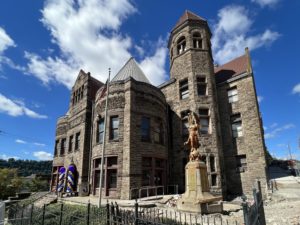
Personally dedicated by Andrew Carnegie in 1889, Carnegie One has always offered the community more than books; it has housed a swimming pool, ceramics studio, music hall, and other amenities.
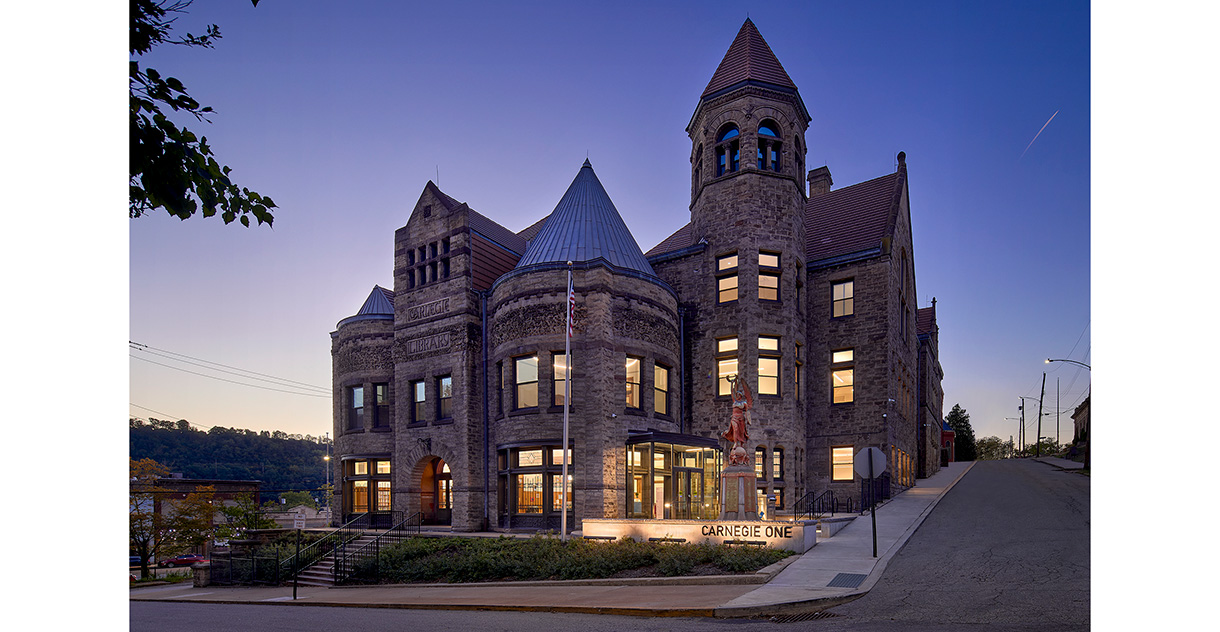 Carnegie One Braddock has been a beacon in the community for over 130 years.
But by 1974, as the city shed industrial jobs, the library—underfunded, roof collapsing—was slated for demolition. Fortunately, a group of residents fought to save it, and began making critical repairs. Since then the library has expanded its offerings, which now include a community print shop and an alternative lending library—for everything from tools to original artwork. But prior to this renovation, much of the building was unused.
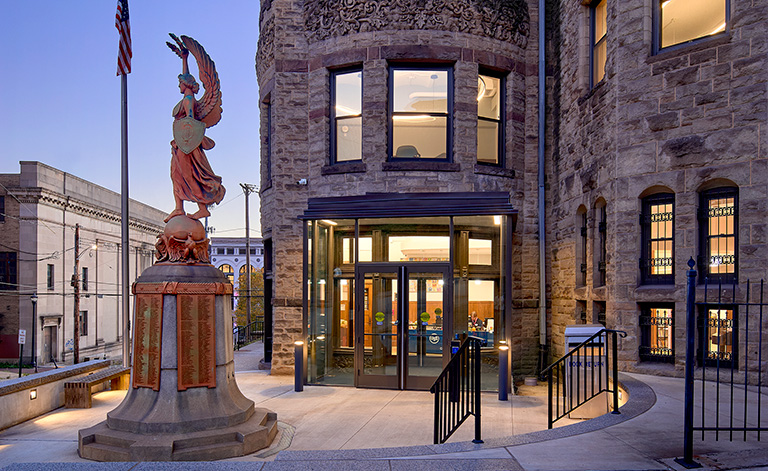 A modern, accessible new entry vestibule slips almost seamlessly into the existing 19th century building architecture.
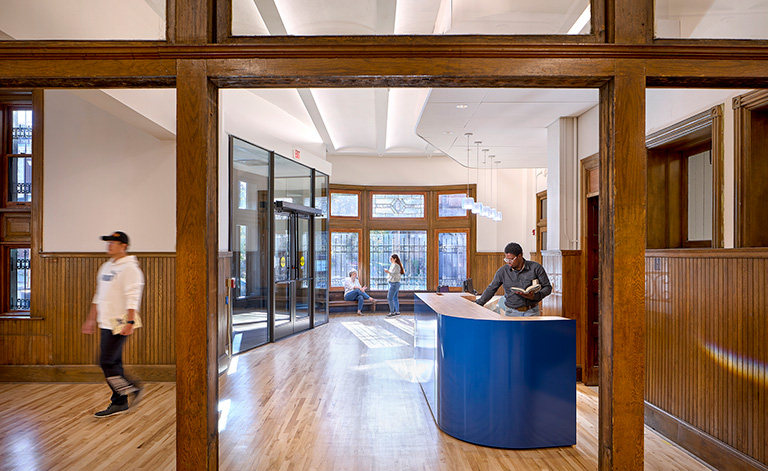 Entering through the new vestibule, patrons find themselves in a light, bright, welcoming space. Planks from the library’s original bowling alley were repurposed as countertops.
A library created to meet community needs must always change to serve them.
Respectful of the library’s history, our renovation restored the building and transformed its spaces. Improvements include reorganizing and amplifying the adult, teen, and children’s service spaces; expanding the print shop into the unused attic; restoring and updating the music hall (for use by local schools and regional theater companies); and inserting ramps and platforms into the old pool to reinterpret its function as the Book Dive—a flexible event space and café. Along with the gym and music hall, the book dive can be rented during off hours to generate income to help sustain the library. By inserting an elevator, adding amenities like air conditioning, and strategically removing walls to open up the space, the renovation makes the library more intuitively navigable, accessible, and comfortable.
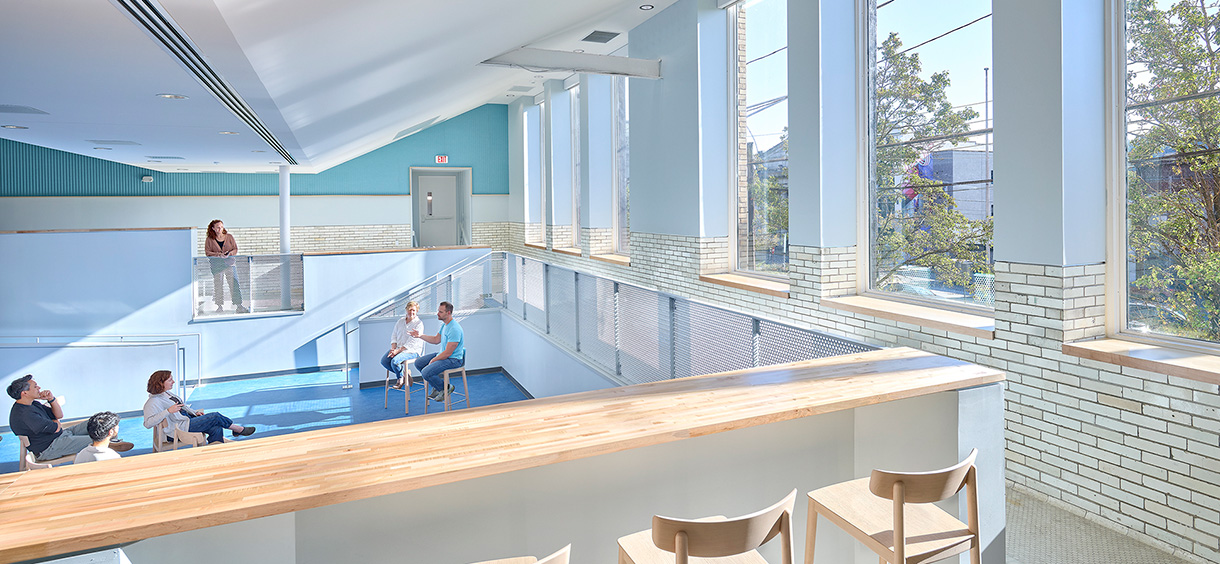 Historic glazed bricks were cleaned and reinstalled as part of the Book Dive transformation.
As Braddock fell on hard times, the library became a place where the community’s needs were met. It provided a rare, public space where all were welcome. It offered a safe place for kids. It lent folding chairs, tables, and tents for family and neighborhood celebrations. A true community center, the expansion of Carnegie One enables the library to continue enhancing its services, better meeting the needs of its community and fostering an ongoing renaissance in the heart of the Rust Belt.
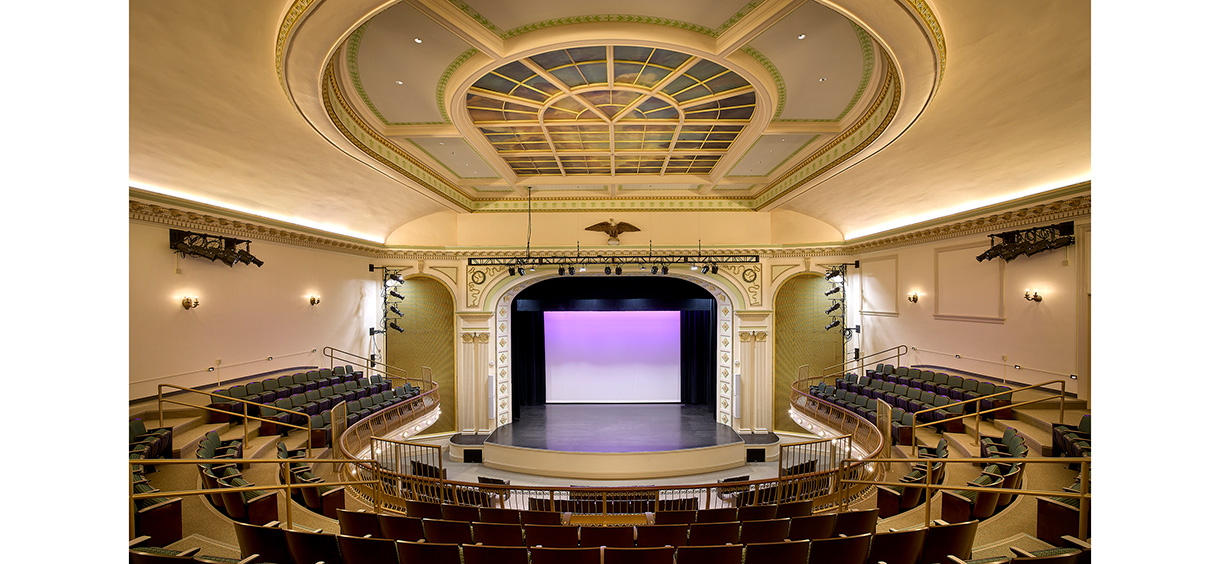 The refurbished auditorium is ready to host school and community groups, events, and performances.
-
 Before and after: A former swimming pool has been transformed into community gathering space nicknamed the Book Dive.
-
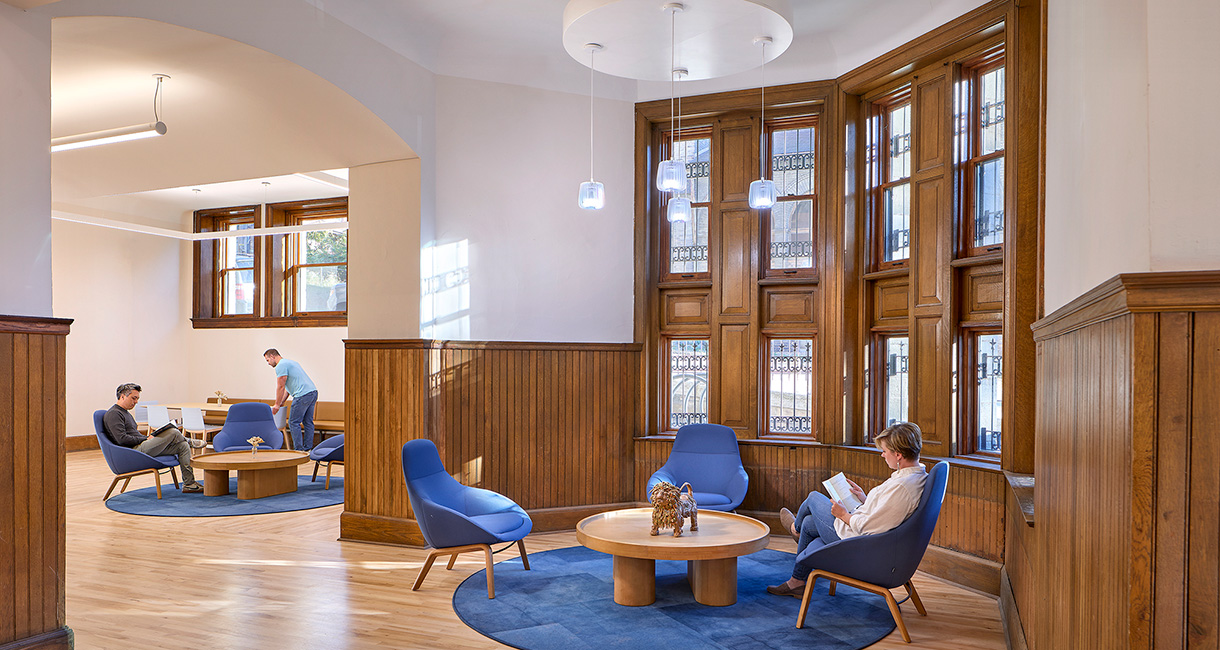 Salvaged wood flooring was reused to repair missing wainscotting inside the library.
-
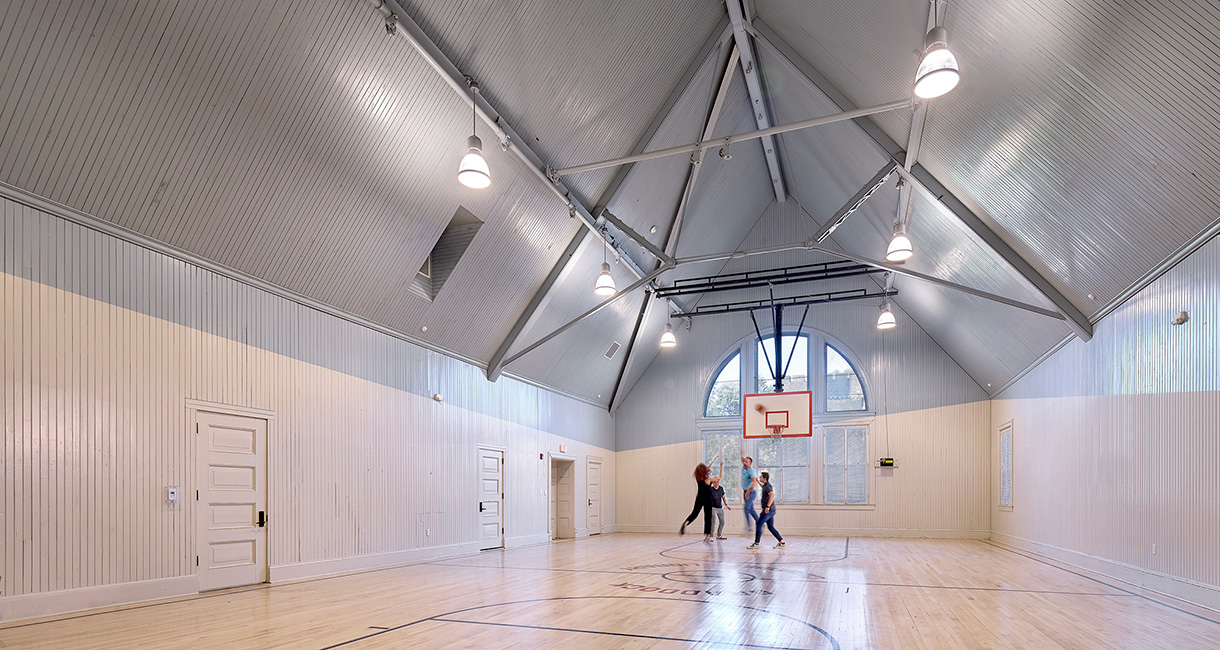 Even in its renovation the library stays true to its purpose to provide amenities, like a basketball court, to the community.
-
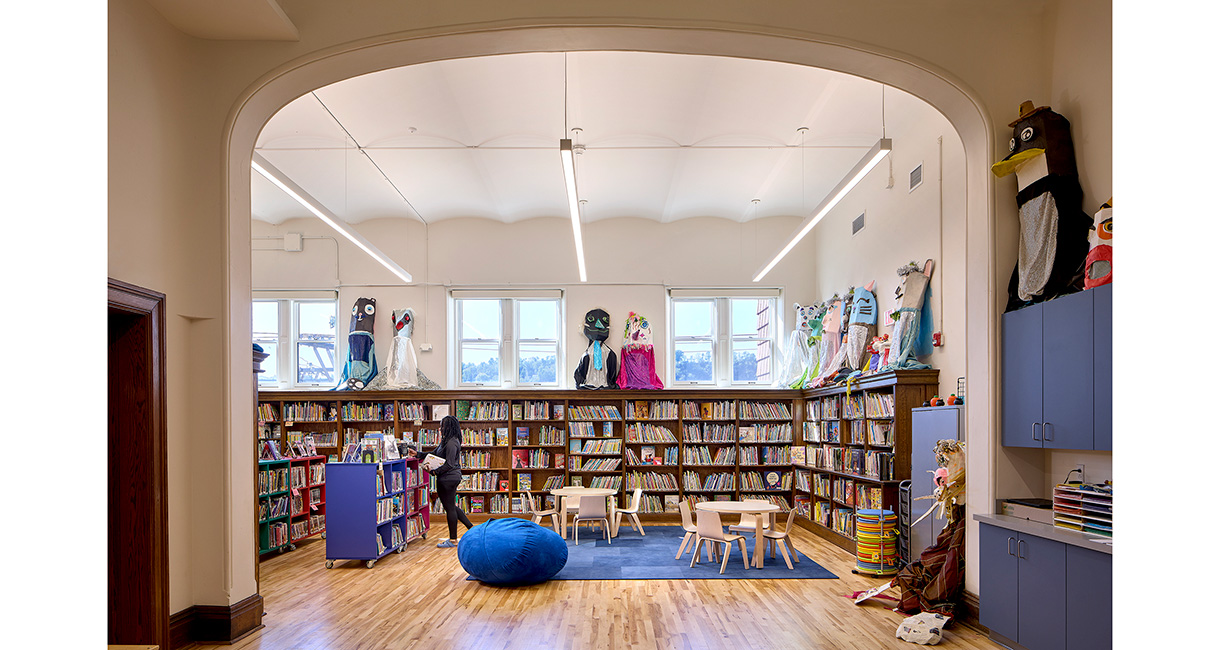 Historic double-sided bookshelves were converted into single-sided units and adapted to conceal mechanical equipment, allowing the library to serve today’s collection needs while maintaining their historic character.
-
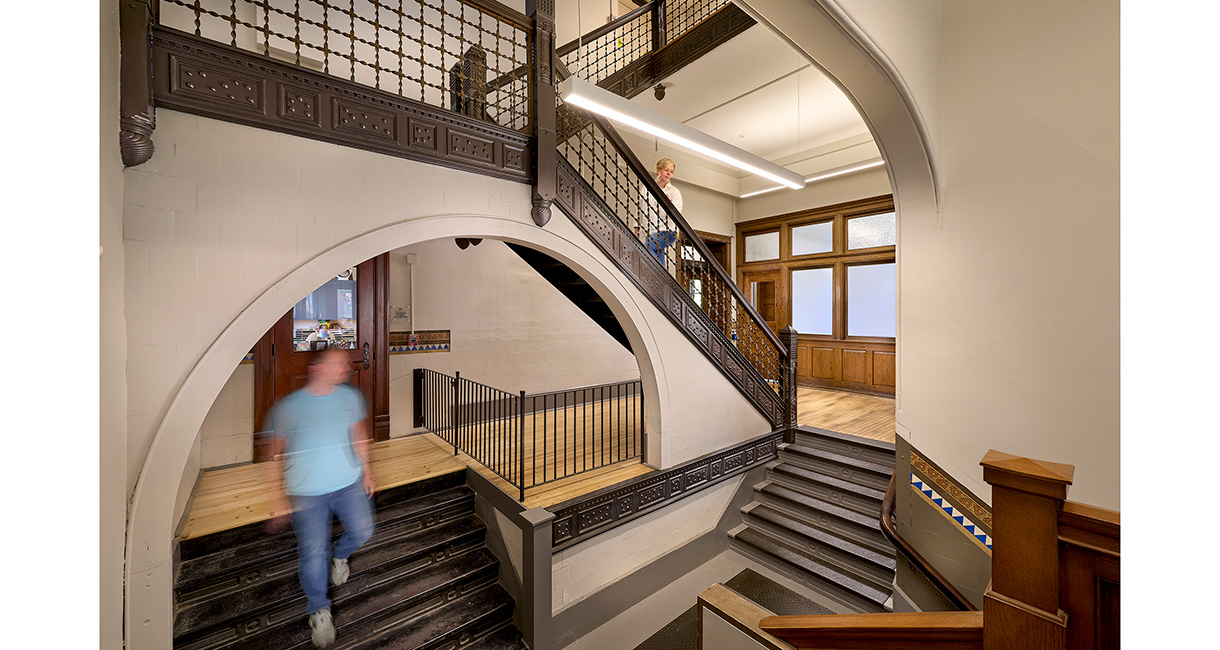 Seventy-eight doors were refurbished or reclaimed and now meet current requirements for accessibility and security while maintaining the historic nature of the openings.
-
News