


Insights
Jul 9, 2024 _ insights
The Health Equity Framework: Improving Resilience Through Design
Resilience is an equity issue, directly linked to the resources a person has to cope with environmental stressors. The lack of these social, physical, and economic resources leads to adverse health outcomes. The places and spaces we inhabit have a significant impact on our health but there is little practical guidance for health facilities on best practices for health equity.
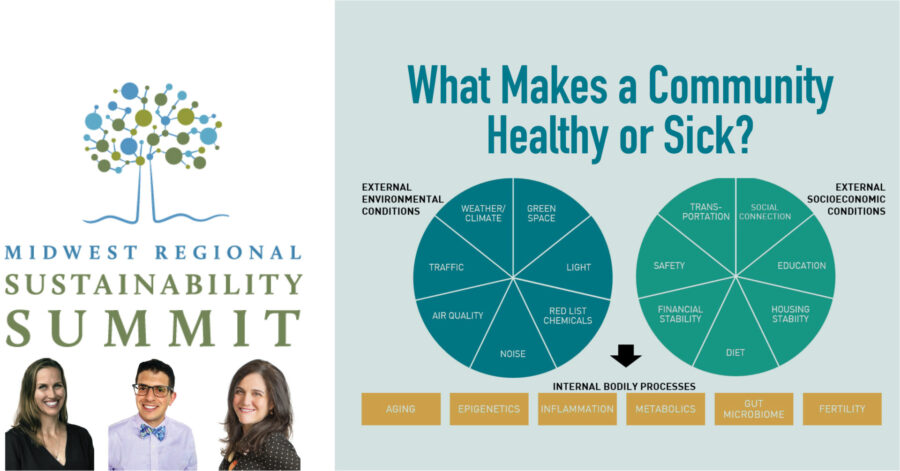
The exposome is the environmental and socioeconomic conditions that impact an individual’s well-being and how architecture can contribute to positive health outcomes. Our recent poster presentation at the Midwest Regional Sustainability Summit shared how some of the resilience factors related to the exposome impact individuals, buildings, and communities, and how through this metric, we aim to make resilience more visible and quantifiable to help inform health equity decisions. Our poster included information on what makes a community healthy or sick; how resilience, sustainability, and equity are related; and how the built environment can provide a wellness intervention.
We study social determinants of health in conjunction with environmental conditions including health beyond buildings, welcoming and inclusive spaces and regenerative design for the development of equitable communities where everyone can thrive. This resulted in a health equity framework that accounts for environmental and socioeconomic factors in the exposome to provide resilience at multiple scales. The framework helps to ensure that an equity focused lens is applied to the salutogenic strategies to increase the efficacy and relevance of the design to the population served.
Angela Mazzi FAIA, FACHA, EDAC is a principal at GBBN. Harnessing studies on human psychology, research on our biological need for nature, a focus on clinical workspaces, and experience with Lean strategies, Angela creates exceptional environments that empower patients and practitioners. She regularly presents and publishes her research in industry and peer reviewed journals and is sought out by Healthcare Design Magazine, the New York Times, and other publications to share her healthcare expertise with their readers.