



Through Children’s Eyes: Rethinking the Design of Pediatric Healthcare Arrival Spaces
←
To Project Types
| by Shan Jiang, Ph.D. | Zahra Daneshvar, EDAC | Kirsten Miller, AIA, EDAC | Sean Cottengim, AIA |
What it is:
Addressing a gap in existing studies, this collaborative research between Cincinnati Children’s Hospital Medical Center and GBBN explored vehicle and pedestrian movement patterns within the primary circulation zones of a pediatric hospital, focusing on the wayfinding experiences of children and their parents. Guided by a systematic literature review, we developed design recommendations and conducted a Post-Occupancy Evaluation (POE) to assess spatial navigation and behavioral patterns at Cincinnati Children’s Hospital Medical Center’s (CCHMC) Burnet Campus. The hospital’s main concourse and entrances were renovated to integrate positive distractions and respite spaces through a collaborative effort between GBBN and Kolar Design.
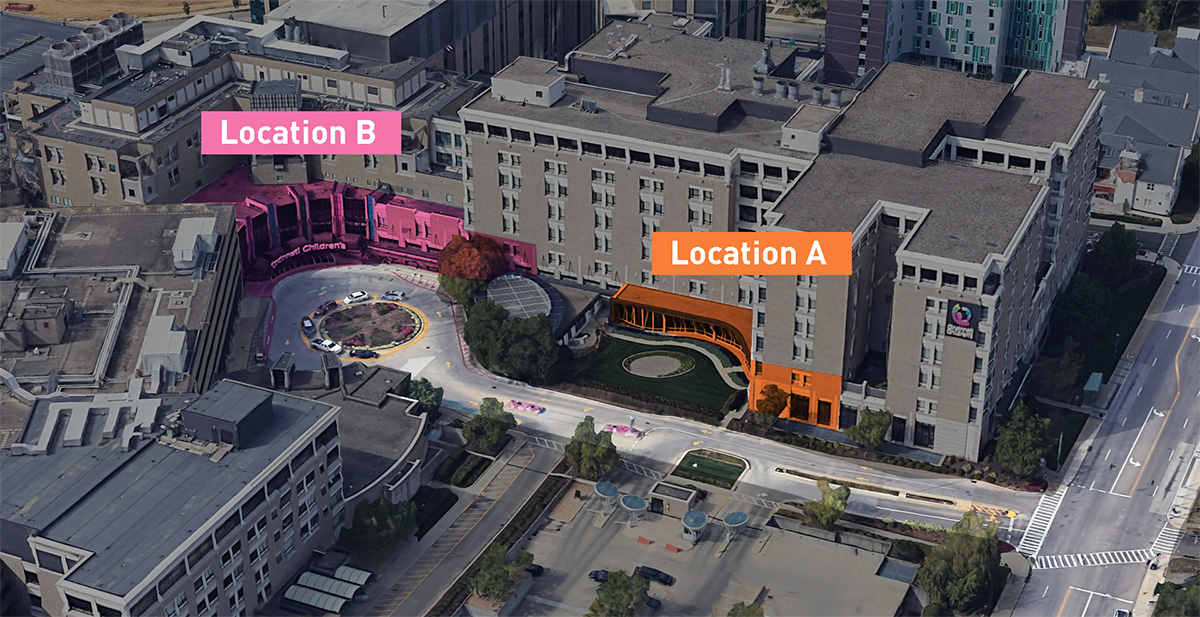
The POE collected data on vehicular behaviors in the building arrival zone, and pedestrian behaviors and events occurring in the main concourse, with an emphasis on the Location A entrance lobby and the Location B elevator lobby. Using onsite observations and shadowing techniques, we evaluated users’ behaviors, with particular attention to child-parent interactions and the impact of positive distractions. Through Space Syntax analyses, the locations of positive distractions were critically examined regarding their visibility, accessibility, and potential impacts on user interactions with these features. By analyzing the behaviors of diverse user groups, this study provides insight into how child-friendly design features and positive distractions can enhance the experience of pediatric patients.
LOCATION A
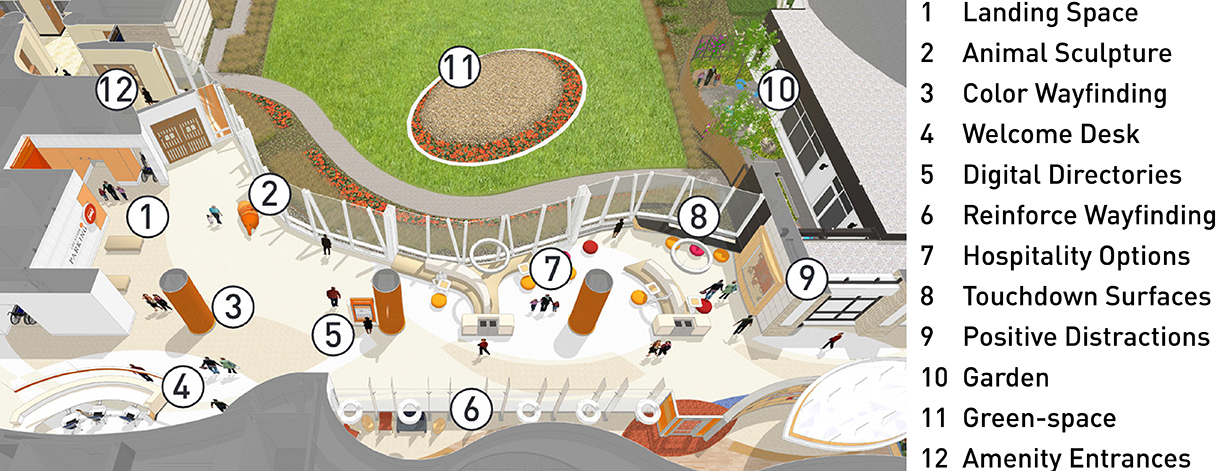
Cincinnati Children’s Arrival Concourse (Location A) provides views, wayfinding ease, and positive distractions for young patients and families.
Why is it important?
The initial moments in a healthcare facility significantly shape the experiences of patients and visitors. For pediatric patients, arrival spaces are particularly crucial in influencing their perception of care quality and overall well-being. Research has shown that feelings of fear and helplessness can lead to increased stress and reduced satisfaction among young patients. To mitigate these effects, incorporating positive distractions through a child-centered design approach is critical.
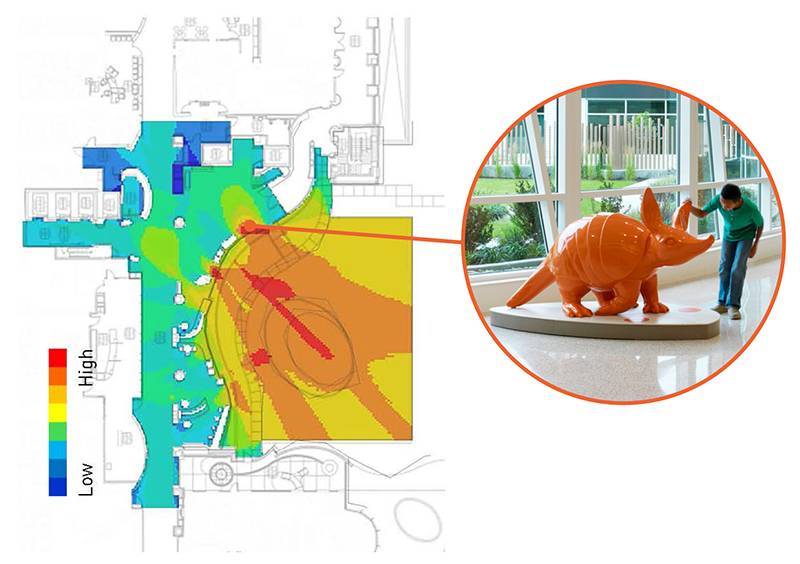 Based on infant and toddler height ranges, the Armadillo statue is the most visible positive distraction in the Location A entrance lobby. A detailed analysis of visibility to various positive distractions across all age groups is provided in the full research report.
The study evaluated the following aspects of the CCHMC hospital arrival zone:
- The vehicular and pedestrian behavior patterns in the hospital arrival zone, including the entrance lobbies and main concourse;
- The performance of the expanded Location A entrance lobby, which offers spaces and features that support a variety of activities;
- Various positive distractions and the roles in providing “getting away” opportunities for patients, families, and staff members in the hospital.
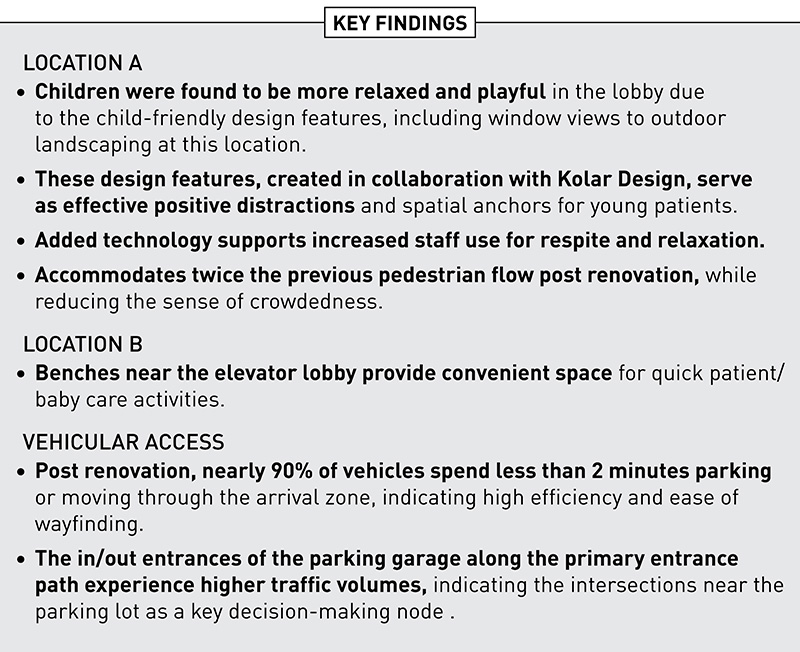
This research was presented at EDRA 56 the Environmental Design Research Association’s (EDRA) annual conference as well as the Healthcare Design Conference (HCD). View the presentation here.
You can read the full report here.
Research collaboration and facilitation from Jason Luthy, Cincinnati Children’s Hospital Medical Center. Additional research support by: Aaron Anderson, Brooke Behnfeldt, and Megan Mershman (GBBN); Ben Earls; Bryan Korb; Kolar Design; KFI Engineers (formerly Fosdick & Hilmer Consulting Engineers); THP Limited; The RCF Group; and Messer Construction.