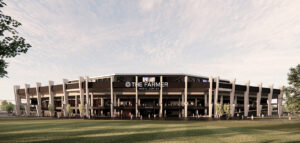



When Every Seat Feels the Beat
MEMI, The Farmer Music Center
←
To Project Types
Cincinnati, OH | 320,000 SF
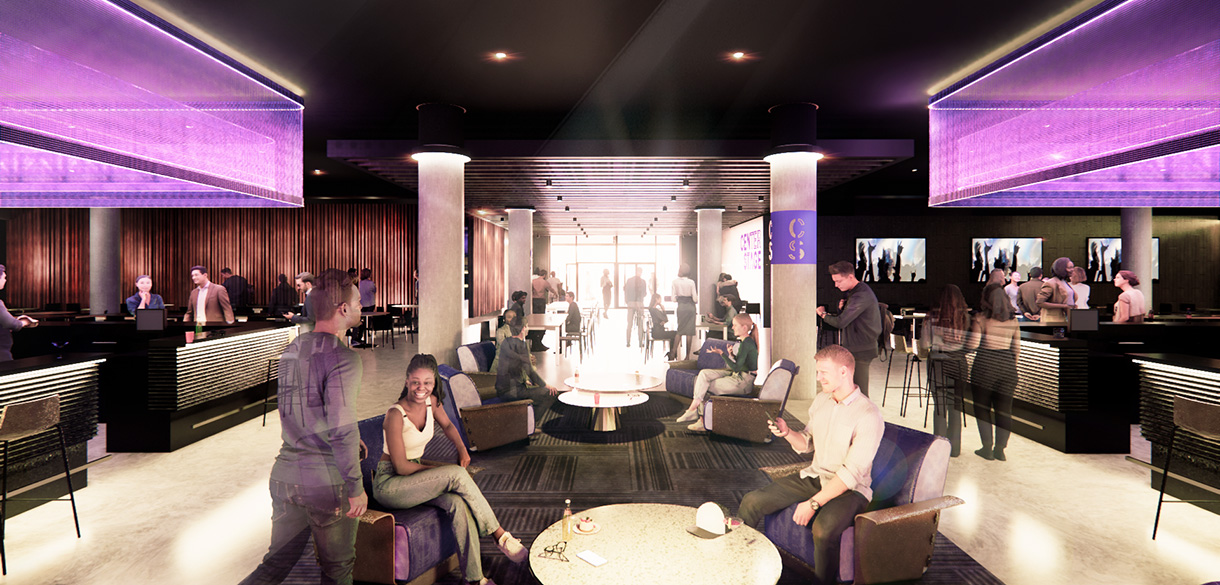 The Farmer Music Center features four clubs, each with its own character, offering patrons unique amenities and distinct concert-going experiences.
Live music looks very different than it did five years ago. Post-COVID, audiences are more selective, artists’ business models have shifted, and venues are competing not just with each other—but with the comfort and convenience of people’s living rooms. The Farmer Music Center reimagines what a concert venue can be by filtering design moves through a simple question: does this make the experience better for the person holding the ticket?
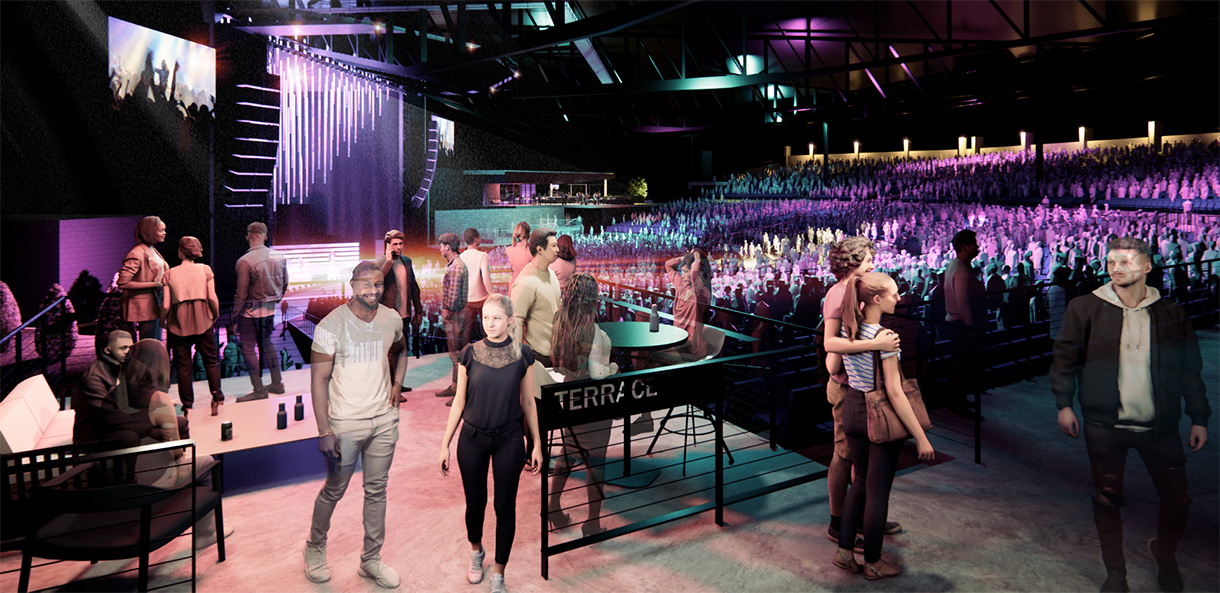 A VIP viewing terrace: Creating a sense of intimacy to the stage a big part of experiencing a live show and was a key design driver.
Intimacy to the stage was critical. The relationship between the front row and the performer was carefully calibrated so audiences can feel close—seeing the energy and effort of a live performance—without compromising sightlines for the thousands of seats behind them. That single move influenced the placement of every row that followed, ensuring that no seat was sacrificed in favor of exclusivity.
All arts projects require choices. All choices come with trade-offs. Our proprietary computational tool allowed the team to evaluate different seating configurations, their costs, and revenue implications in real time. Change one thing in one place, everything else shifts—building size, operations, experience, and revenue. The tool made those ripple effects visible immediately, helping MEMI understand how potential trade-offs would impact the patron experience.
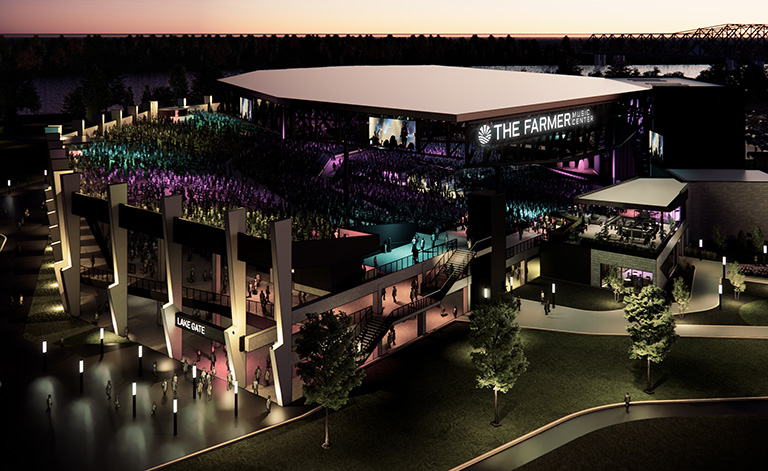 Stacking patron amenities under seats helps cut the travel distance for patrons seeking concessions or restrooms.
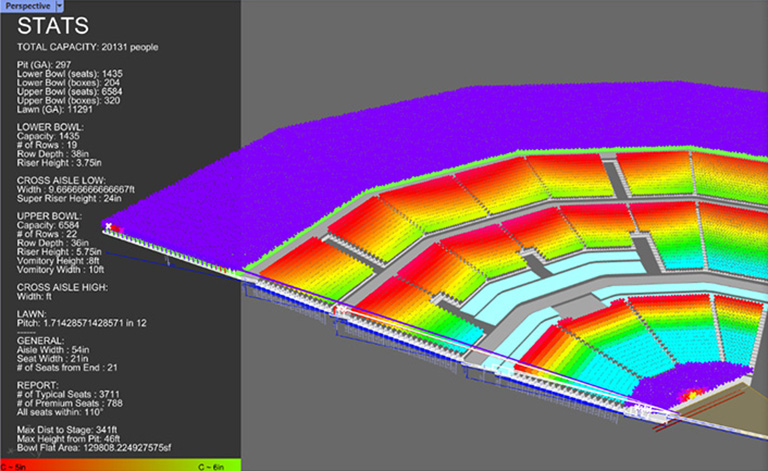 The proprietary tool we developed to iterate different seating bowl configurations allowed the team to understand how even small changes might impact patron experience and building cost and adapt the design in real-time based on feedback.
Amenities were treated as essential infrastructure, not afterthoughts.
By stacking clubs, concessions, and restrooms beneath the seating bowl, patron travel distances were cut in half while doubling the number of concession points. That efficiency translates directly into revenue while making it just as easy to grab a drink or find a restroom as it is at home. Multiple clubs—each with its own identity inspired by the idea of “glamping”—offer a range of price points and experiences, while also creating rentable, climate-controlled spaces for off-season events.
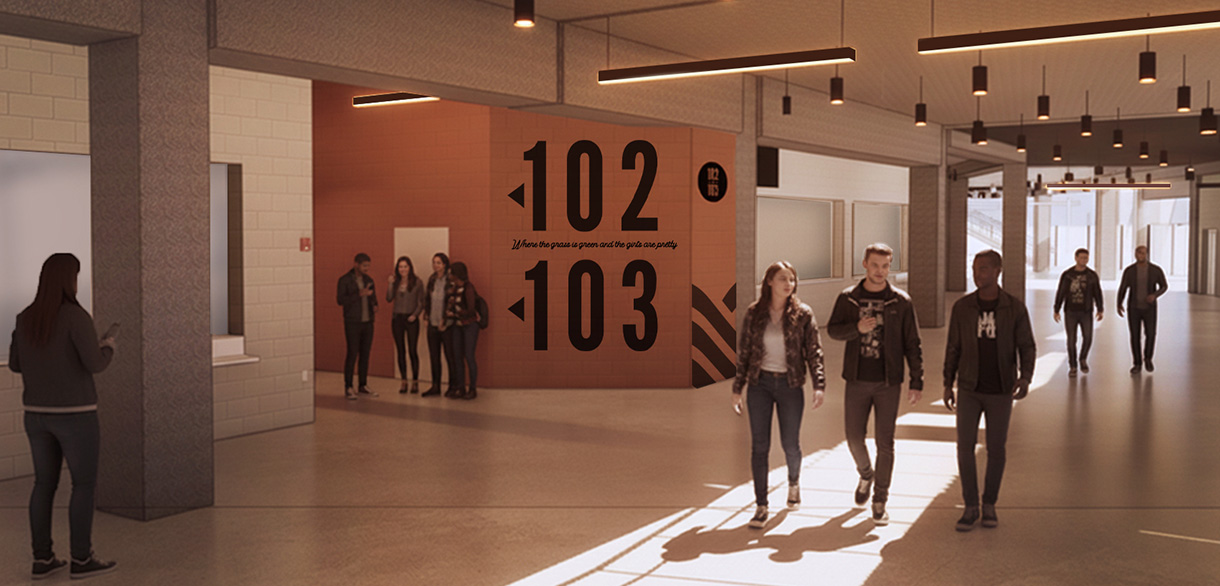 Intuitive wayfinding leans on the warmth of the painted corridors as well as bold over-sized typography to guide patrons through out the venue.
Environmental graphic design was integrated early, resulting in clear wayfinding signage, custom artwork, a consistent color story, and 18 intentional and uncluttered zones that can accommodate external brand sponsors. The result is a venue that functions beautifully, feels effortless to navigate, and positions itself as a true cultural destination—one designed not just for today’s concertgoer, but for the future of live music.
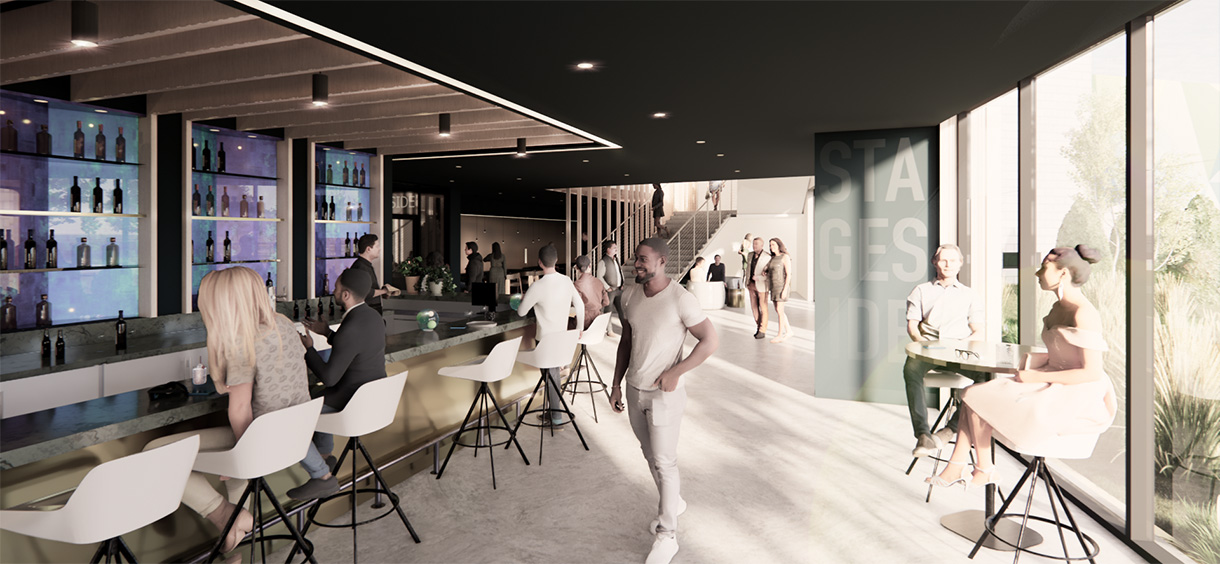 Club spaces like this one at The Farmer Music Center bring in natural light and connect patrons to outdoor views, grounding them in a distinct sense of place.
-
News